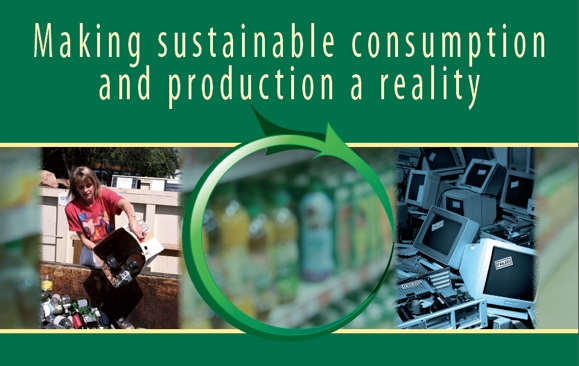
The Strategic Role of Communication for Sustainability

What do the terms “communication” and “sustainability” mean when they are linked together? What do we understand by “communication”? What does “sustainability” imply for us?

People have different understandings of this terminology, depending on numerous linguistic and cultural characteristics in various countries in Europe and around the world, which can go far sometimes from the original definition of Sustainable Development set in 1987 by the UN Brundtland Commission as the “development that meets the needs of the present without compromising the ability of future generations to meet their own needs.

Continue reading ETICAMBIENTE® BLOG POST: “A Sustainable Innovation Governance to Solve Environmental and Social Problems” and engage in the conversation by submitting your comments »

Green Web Hosting! This site hosted by DreamHost.

Get Your Green Host!

How to Communicate Environmental, Health and Safety Risks to the Public


As tension grew between several industries and local communities at risk over environmental pollution and human health, citizens, activists and governmental agency officials began to pay closer attention to the communication practices of the medium-to-large-sized companies and multinationals in describing these dangers.

In the last thirty years risk communication studies grown steadily as a consequence of the increasing complaints regarding the quality, trustworthiness and accuracy of the industry’s reports about risk issues and the interaction with affected communities.

But, how can we define risk communication? In general, we can say that risk communication is any public or private communication that informs people about the existence, nature, form, severity or level of acceptability of a risk. In a more specific context, especially the one in which health, safety and environmental managers operate, the meaning of risk communication, as well as policies and strategies about how to communicate minor and major environmental risks to the public and stakeholders, has become more precise in its objectives and assumptions about the different target audiences that risk communication messages need to reach.

Continue reading ETICAMBIENTE® BLOG POST: “How to Communicate Environmental, Health and Safety Risks to the Public” and engage in the conversation by submitting your comments »

Green Web Hosting! This site hosted by DreamHost.

Get Your Green Host!

Create a Sustainability Policy for Your Event

On 06/03/2012, in Sustainability Communications, Sustainability Management, by Dr. Paola Fiore

Almost every human activity uses up precious natural resources, resulting in large-scale production of waste, increased emissions of greenhouse gases, inefficient consumption of water and energy use. To look into a more hopeful and sustainable future, and see one that is truly environmentally and socially responsible for the future of the next generations and our planet, we can’t carry on consuming and throwing away after a single use. However, if you underscore all your business operations and purchasing decisions having always this simple truth in mind, you will make the right decisions to bring any possible event towards sustainability.

In order to help you make your event really “green” and sustainable, we would need to delve first into all different areas of event planning (which is not the aim of this post), showing you how each management and communications system could affect the natural environment and local community, and suggesting you any possible sustainable alternatives. Although, before starting the analysis of the major areas of impact that your event could have on the natural environment and society, we want to help you create your green event policy, as it is the first step to make within your company to reducing the impact of all your meetings and events.

Continue reading ETICAMBIENTE® BLOG POST: “Create a Sustainability Policy for Your Event” and engage in the conversation by submitting your comments »

Green Web Hosting! This site hosted by DreamHost.

Get Your Green Host!

Top 5 Components of a Sustainability Management System

On 14/01/2011, in Sustainability Management, by Dr. Paola Fiore


Due to the impact of globalization and challenges of global warming, from reducing waste production and carbon emissions to managing energy and water resources, a more responsible approach to sustainability is needed by all industry and governments around the world to prioritize the protection of natural resources, as well as enhance new business and social opportunities.

To achieve a sustainable, long term economic and social development authorities, managers and politicians are called upon to address global cross-cutting problems, while solving new local issues in the main areas of economy and society.

A solution to one regional problem involves tackling other related key world-wide challenges, and this is at the core of any successfully integrated Sustainability Management System (SMS) for those private companies or public organizations that understand the importance of dealing with the complex interdependencies of ecosystems & environmental services, and wish to create efficient usage of economical and labour resources, as well as minimum environmental impacts.

Continue reading ETICAMBIENTE® BLOG POST: “Top 5 Components of a Sustainability Management System” and engage in the conversation by submitting your comments and thoughts »

Green Web Hosting! This site hosted by DreamHost.

Get Your Green Host!

Increase the Triple Bottom Line & Improve Brand Reputation

On 22/12/2010, in Sustainability Communications, by Dr. Paola Fiore


Whether you are a chief executive officer, or a member of your board of directors, as well as if you are a C-level executive, or a senior or middle manager, you have to understand why you need to help your organization increase the Triple Bottom Line (sometimes referred to as “TBL” or “3BL” – People, Planet and Profit) – and not just the Economic Bottom Line- and improve brand reputation.

On the one hand, every manager knows the meaning of the accounting terminology “Bottom Line”, as it describes the net income or loss that an organization makes at the end of a financial or fiscal year, and that is utilized to calculate the earnings-per-share (EPS) of a business.

On the other hand, not every businessman recognizes what the definition of the “Triple Bottom Line” accounting method is about: i.e. analysis, management, measurement and communication of an organization’s environmental responsibility, its social awareness and economic profitability.

Continue reading ETICAMBIENTE® BLOG POST: “Increase the Triple Bottom Line & Improve Brand Reputation” and engage in the conversation by submitting your comments and thoughts »

Green Web Hosting! This site hosted by DreamHost.

Get Your Green Host!

Page 1 of 212